

Pat Nakata was an icon of his community in Hawai‘i, as good as a citizen can get. Suddenly, he was afflicted by a terrible disease, and only because asbestos was put in the products he worked with by an auto company in 1966. The company fully understood the danger it posed to people like Pat, but it refused to change. Pat could have lived for another twenty or thirty years. Instead, tragically, he died an avoidable death much earlier.
Join us for this week’s episode, with special guest Cynthia Davis, who has been working as a medical adviser with our firm for more than 30 years. She helps to gather medical evidence in cases like Pat’s, and works closely with sufferers of asbestos-related illnesses and their families.
Most people are unaware of how ubiquitous asbestos was. Much more than fire-supressing insulation, it found a place in many thousands of products, from brake pads to dental casts.
People exposed to it develop cancer at an alarming rate. Huge asbestos companies like Johns-Manville found out about that long ago, but they did not share that information widely when they did. Instead, they communicated with other asbestos companies to supress that information. You can read the full story about it here on our Mesothelioma Knowledge Center: How the Asbestos Industry Suppressed and Altered Medical Research.
Thus, exposure to asbestos has happened in all kinds of environments. Our first cases came out of Pearl Harbor, and we traced 30 manufacturers who sent their products into Pearl Harbor for decades without warning the workers. Others have come just from second-hand exposure, where shaking out asbestos-contaminated clothing that someone has brought home from work produced a cloud of asbestos fibers into the air, where it was breathed into the lungs.
Cynthia brings a unique perspective to the conversation, which comes from her medical background and experience specializing in mesothelioma and asbestos cases. It’s because of her fine work that the right medical articles are highlighted and flagged, so that the best scientific understanding can be employed in support of the victims of asbestos companies liable for their illnesses. Above all, Cynthia brings comfort to those affected by helping them through their darkest times. Listen in to her talk with Gary and Mike, and you will understand an important human dimension of the asbestos story—a story that is still far from over.









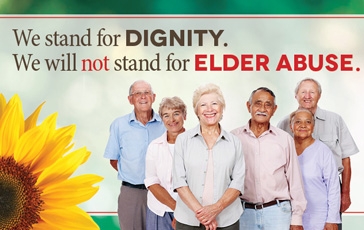



 Hawai‘i’s Adult Protective and Community Services Branch (“APCSB”), which protects vulnerable adults from abuse and neglect, reported 801 cases of elder abuse in 2014. However, elder abuse is a “hidden” wrong as experts estimate that for every report of elder abuse to the authorities, between 10 and 24 go unreported (see Lifespan of Greater Rochester et al., 2011). Using this estimate, there are approximately 10,000-24,000 cases of elder abuse in Hawaiʻi each year.
 Between 1990 and 2012, the number of elderly aged 75 and older increased 47% nationally, compared to a 116% increase in Hawaiʻi. 15.6% of Hawai‘i’s population was 65 and over in 2013, compared with 14.1% nationally.
 In the United States, the 2010 Census recorded the greatest number and proportion of people age 65 and older in history: 40.3 million, or 13% of the total population. This “Boomer Generation” effect will continue for decades. By 2050, people age 65 and older are expected to comprise 20% of the total U.S. population.
 The fastest growing segment of America’s population consists of those 85 and up. In 2010, there were 5.8 million people aged 85 or older. By 2050, it is projected that there will be 19 million people aged 85 or older.