Study Finds Cancer-Causing Herbicides and Pesticides in Hawai‘i Water

The waters in and around Hawai‘i may look picture-perfect to the naked eye, but potentially dangerous herbicides and pesticides are lurking beneath that beauty.

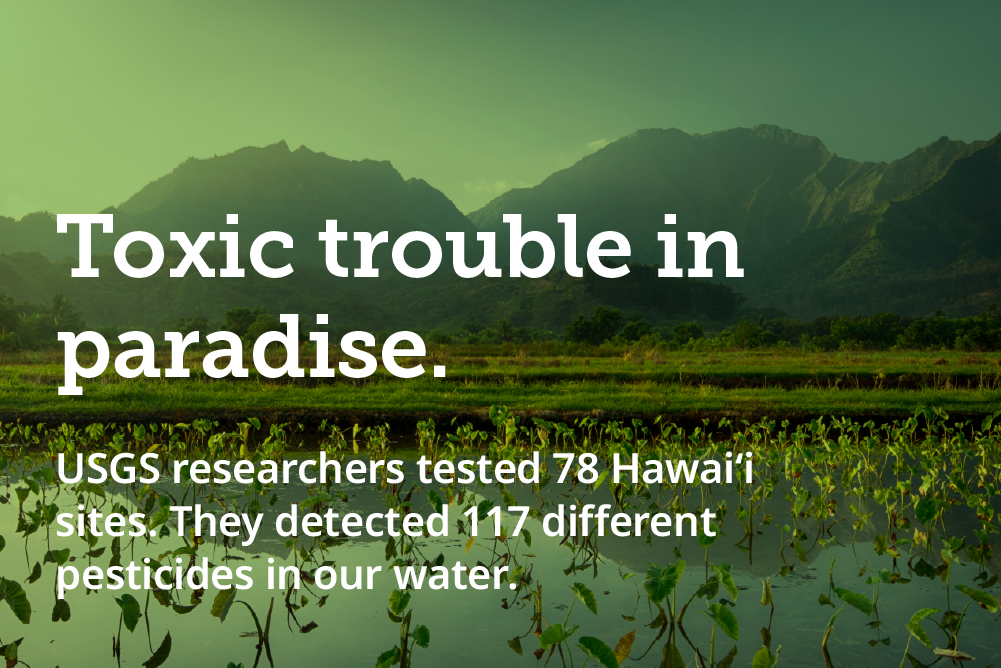
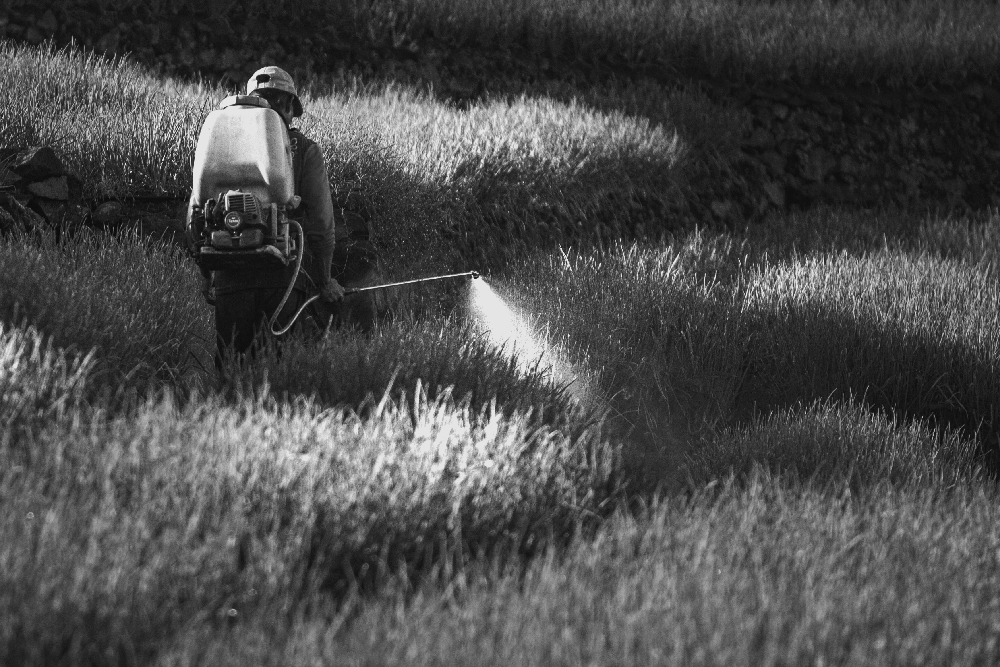
A recent U.S. Geological Survey (USGS) study found widespread pesticide contamination in many streams, ponds, and canals. Between 2015 and 2019, researchers tested 78 sites near agricultural or developed land and found pesticide pollution on Kaua‘i, O‘ahu, Maui, and the Island of Hawai‘i. Even ocean water near the shoreline, where locals and tourists swim, revealed traces of pesticides and other chemicals.

Herbicides and Pesticides in Paradise

The government survey detected 117 different herbicides and pesticides in the water. Thirty of them, including herbicides like atrazine, insecticides such as fipronil, and fungicides like azoxystrobin, were recorded at numerous locations. Survey findings included:

  • 86% of samples contained a mix of two or more pesticides
  • Several storm samples exceeded federal aquatic-life safety benchmarks
  • In at least one sample, atrazine exceeded federal drinking water standards

Even at low concentrations, repeated or long-term exposure to this chemical mixture poses serious risks, especially when people live, work, or raise children near contaminated water.

Lawsuit Filed Against Boys & Girls Club of Hawai’i for Failing to Protect Child from Sexual Abuse and Bullying

HONOLULU – The Hawai’i law firm Galiher DeRobertis & Waxman has filed a lawsuit against the Boys & Girls Club of Hawai’i (BGCH), alleging the organization failed to protect a 10-year-old boy from repeated sexual abuse, harassment and bullying by another student at its Spalding Honolulu Clubhouse.

According to the lawsuit, BGCH staff ignored repeated reports of abuse from the victim, his 9-year-old sister and their mother between November 2023 and March 2024, and the alleged perpetrator—a fellow student at Lunalilo Elementary School—remained in the same program and continued his assaults. The abuse included physical and sexual assaults, racial harassment and repeated bullying that left the young victim traumatized and in need of professional counseling.

Hawai’i Bill Empowers Sex Trafficking Victims to Seek Justice

A bill awaiting Hawaii Gov. Josh Green’s signature could give sex trafficking survivors new power to seek justice—not just against their traffickers, but also against the individuals and businesses that profit from their exploitation.

House Bill 111, which was approved by both the Hawaii House and Senate earlier this year, addresses critical gaps in how the state handles sex trafficking. If signed into law, the bill would:

  • Allow sex trafficking victims to file civil lawsuits against people, businesses, or institutions that financially benefit from sex trafficking or sexual exploitation.
  • Extend the statute of limitations for civil claims related to sex trafficking from two years to ten.

According to advocates, this legislation could be a turning point for victim empowerment in Hawai’i, where sex trafficking remains one of the most underreported crimes.

Hawai‘i’s Asbestos Legacy: A Growing Mesothelioma Threat

​​Mesothelioma deaths in the U.S. surged by 20% between 1990 and 2019, according to BMC Public Health. This increase is tied directly to decades of asbestos exposure, especially among workers in construction, shipbuilding, military service, and manufacturing.

The rise in cases is particularly alarming in Hawai‘i, where thousands of veterans have been exposed to asbestos while working on Navy ships, submarines and maintenance facilities at the Pearl Harbor Naval Shipyard since World War II. The state health department reported over 700 asbestos-related deaths between 1999 and 2017, including 139 from mesothelioma.

Hawai’i Caregiver Shortage Is Putting Seniors in Danger

The state’s healthcare system is facing a growing crisis that puts the state’s kupuna—our cherished elderly residents—at serious risk. Hospitals and care facilities across the islands are struggling to fill 4,600 vacant medical staff positions. According to the Healthcare Association of Hawai’i (HAH), the situation is so severe that it’s directly affecting the quality of care for seniors. Now, healthcare leaders are sounding the alarm about the growing gap between available caregivers and the needs of the state’s aging population.

The Impact on Nursing Home Care

Nursing homes and long-term care facilities are being hit the hardest. Hawaii currently lacks more than 600 certified nurse aides and over 300 nursing assistants. Home health aides are also experiencing a 30% vacancy rate.

These roles are critical in ensuring the well-being of elderly residents. As Wes Lo, CEO of Ohana Pacific Health, told the Honolulu Star-Advertiser:

“As people age, their healthcare needs grow more complex, with potentially more severe illnesses. We are seeing greater demand for nursing home beds and home health. Certainly, the aging population is starting to catch up with us.”

In other words, seniors need more specialized care, precisely when there aren’t enough trained professionals to provide it.

Hawai’i Doctor Warns About Mysterious Glyphosate Exposure Cases

Neurodegenerative diseases (NDDs) affect more than nine million Americans, and that number is expected to more than double by 2025, according to research by Harvard Kennedy School’s Belfer Center for Science and International Affairs. While the cause of NDDs remains unknown, medical experts are increasingly raising alarm about toxic exposure — specifically, exposure to glyphosate.

Concerns about exposure to toxic chemicals like glyphosate are playing out in communities around the world. In New Brunswick, Canada, neurologist Dr. Alier Marrero watched as his caseload skyrocketed with patients displaying unusual symptoms of neurodegenerative disease, many of whom were under age 45.


Hawai’i Workplace Deaths Soar as Safety Watchdogs Push for Reform

Workplace-related deaths in Hawai’i are surging at an alarming rate, outpacing the rest of the nation. According to the U.S. Bureau of Labor Statistics, the state saw a nearly 67% increase in deadly accidents in 2022, with fatalities climbing to 25 from 15 the previous year. Nationwide, the number rose almost 6% over the same time. The massive increase raises red flags about how the state protects its workers and the need for more accountability when businesses fail to protect employees. As a result, the AFL-CIO is calling for stronger safety measures across all industries.

What Are Hawai’i’s Most Dangerous Industries?

Hawai’i’s transportation and warehouse industry led in the number of workplace deaths in 2022, with 10 — eight of them from transportation-related accidents. Construction also proved dangerous, with four workers lost.

How to Ensure Your Home Is Safe from Asbestos Dangers

While Hawaiʻi residents are increasingly aware of the serious health risks associated with occupational exposure to asbestos in the workplace and from military service, many don’t realize how frequently they may come in contact with the material.

Used for insulation, as a fire retardant and many other applications, asbestos can be found in homes and in military housing throughout Hawaiʻi. In addition, generations have been exposed to asbestos in the workplace and in military service.

Hidden Asbestos Danger Lurks in Aging Homes, Buildings

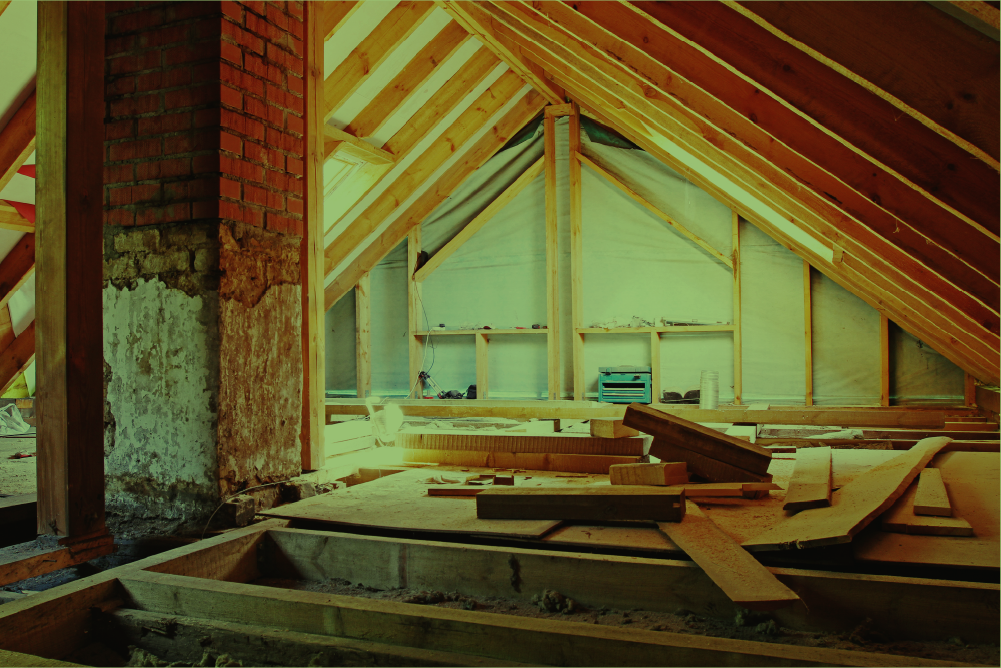
Asbestos has been widely used in the construction of buildings in Hawai‘i for generations. According to the Hawai‘i State Department of Health, most residential buildings in Hawaii contain some asbestos, which can be found in ceilings, walls, insulation and flooring.

While these materials pose little risk when a building is kept in good condition, they become hazardous when asbestos is disturbed. Storms, high winds and natural disasters can cause minute fibers to break away and create a risk to human health.

Despite restrictions on asbestos, Hawai‘i residents continue to succumb to mesothelioma cancer

While it’s well-established that the deadly form of cancer known as mesothelioma is caused solely by exposure to asbestos, thousands of people throughout the U.S. mainland and Hawaii continue to die from the disease every year.

About 3,000 cases of mesothelioma are registered each year in the United States. In Hawaii, there are approximately 38 asbestos-related deaths a year, according to the U.S. Centers for Disease Control.

Mesothelioma was discovered in the late nineteenth century and gradually came to be associated with exposure to asbestos. The mineral has been used throughout history, but as the Industrial Revolution took hold, more and more uses were found.