

Negative Effects of Pesticides are Well-Documented

The link between pesticide use and increased rates of cancer is well-documented, with several studies noting that rural communities are especially hard hit by this health crisis. According to a recent study in the journal “Frontiers in Cancer Control and Society,” people who live in agricultural communities in the U.S. where pesticides are used on farms—but who don’t farm themselves—face the same increased cancer risk as people who smoke.

These findings are echoed in another recent study in which researchers conducted a county-by-county analysis of cancer rates and pesticide use in Missouri. The study found that the four counties with the highest use of pesticides per square mile rank in the top 15 for overall cancer rates in Missouri. Further, the study noted that the counties with the highest rates of cancer are rural.
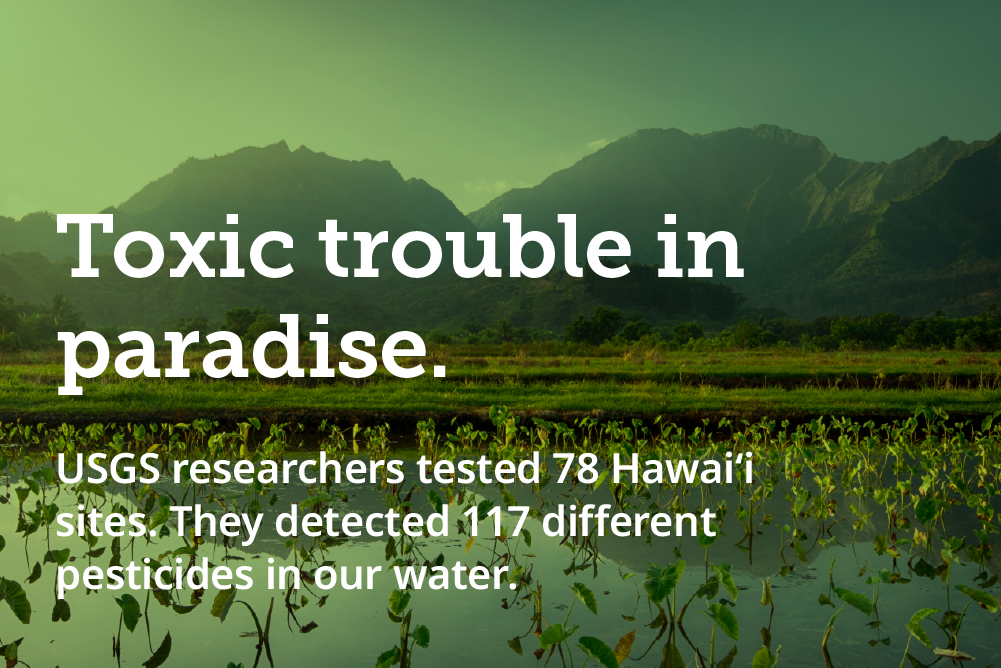
Study Finds Cancer-Causing Herbicides and Pesticides in Hawai‘i Water

The waters in and around Hawai‘i may look picture-perfect to the naked eye, but potentially dangerous herbicides and pesticides are lurking beneath that beauty.

A recent U.S. Geological Survey (USGS) study found widespread pesticide contamination in many streams, ponds, and canals. Between 2015 and 2019, researchers tested 78 sites near agricultural or developed land and found pesticide pollution on Kaua‘i, O‘ahu, Maui, and the Island of Hawai‘i. Even ocean water near the shoreline, where locals and tourists swim, revealed traces of pesticides and other chemicals.

Herbicides and Pesticides in Paradise

The government survey detected 117 different herbicides and pesticides in the water. Thirty of them, including herbicides like atrazine, insecticides such as fipronil, and fungicides like azoxystrobin, were recorded at numerous locations. Survey findings included:

  • 86% of samples contained a mix of two or more pesticides
  • Several storm samples exceeded federal aquatic-life safety benchmarks
  • In at least one sample, atrazine exceeded federal drinking water standards

Even at low concentrations, repeated or long-term exposure to this chemical mixture poses serious risks, especially when people live, work, or raise children near contaminated water.